
For garden tool importers and retail buyers, packaging is part of the product specification. A tool can match the approved sample while its packaging creates problems at receiving, on the shelf or during order fulfillment. Agreeing on protection, pack quantities and artwork before production gives both buyer and supplier a clearer reference.
This checklist focuses on manual garden tools such as hand trowels and transplanters, pruning shears and loppers. Battery-powered products require a separate packaging and transport review.
1. Start with the sales channel
Define where the product will be sold and how it will reach the customer. A hanging card for a garden center serves a different purpose from an individual box used for online orders. Specify whether the quoted pack is a retail display pack, an inner pack or an outer shipping carton.
- Hanging display: agree on card dimensions, hanging-hole position and how the tool is secured.
- Individual box: confirm internal fit, product identification and protection against movement.
- Bulk pack: define separators and surface protection so tools do not rub against each other.
- Tool set: approve the position and retention of every item, not just the outside appearance.
2. Specify protection for each tool
Identify the parts that could damage the packaging or another product: cutting edges, pointed tips, exposed metal heads and projecting handles. Describe the required guard, sleeve, divider or fixing method in the packing specification. Check that protection stays in place when the packed sample is handled.
For cutting tools, confirm the intended packed position and how the closure is secured. For hand tools, examine the head-to-handle area and any surfaces that contact neighboring tools. Packaging should not conceal damage that an incoming inspection needs to detect.
3. Record quantities and carton dimensions
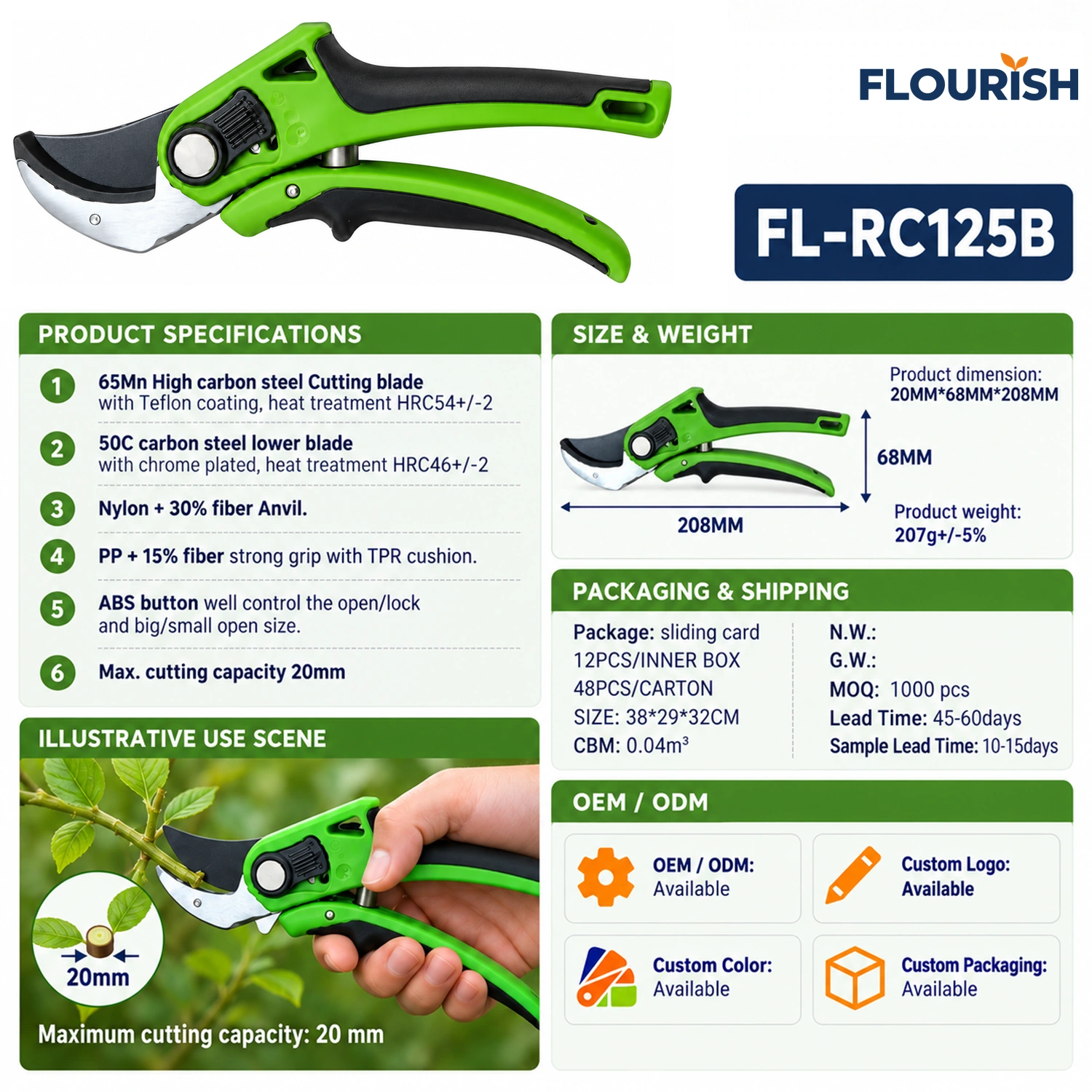
State units per retail pack, units per inner carton and units per master carton separately. Ask for the dimensions and gross weight of the actual packed sample. An estimate based on an unpacked tool can produce an inaccurate freight calculation.
For example, if an inner carton contains six individually packed tools and a master carton contains four inner cartons, the master carton holds 24 tools. Use the same quantity structure on the purchase order, packing list and carton artwork. Clearly identify mixed-model cartons.
4. Approve artwork as a controlled file
Review the product name, model number, barcode, language, care information and any buyer-required marks. Confirm barcode data and scan the printed sample rather than relying only on the digital artwork. Make sure the label refers to the correct model and pack quantity.
Keep a dated artwork revision and identify who approved it. If the tool specification changes, review any related claims or illustrations on the pack. Avoid adding certification, recycled-content or performance claims unless supporting documentation has been checked for that specific product and packaging.
5. Check a complete packed sample
A packaging drawing does not show every fit problem. Request a sample packed using the intended production materials. Open it, inspect how the tool is held, then repack it to check whether the packing method is clear and repeatable.
- Does the tool remain in its intended position?
- Can exposed edges contact or puncture the packaging?
- Are coated surfaces protected from rubbing?
- Are the model number and barcode visible and readable?
- Does the stated carton quantity match the contents?
- Can warehouse staff identify the product without opening every carton?
Agree on any handling or transport tests, acceptance criteria and responsible party before production. A visual sample review alone does not establish that packaging will perform throughout a particular distribution route.
6. Put the approval details into the purchase order
Use a short packing specification alongside the product specification. Record the packaging type and materials, protection method, pack quantities, carton measurements, artwork revision and approved sample reference. If a supplier proposes a substitution, review its effect on protection, dimensions and presentation before accepting it.
For customized projects, our OEM vs ODM garden tools guide provides a useful starting point for organizing product requirements. Pair packaging approval with a garden tool sample inspection checklist so the product and its pack are reviewed together.
Questions buyers often ask
Should packaging be confirmed before the final quotation?
Yes. State the required packaging when requesting a quotation. If the design is still being developed, ask the supplier to identify the packaging assumptions included in the price and confirm the final specification before placing the order.
Is a retail box also a shipping box?
Not necessarily. Confirm whether the retail pack is intended to ship on its own or inside an additional carton. Review the complete packing arrangement used in your fulfillment process.
What should I send with a packaging inquiry?
Provide the tool models, order quantities, sales channel, destination market, preferred pack format, artwork requirements and any retailer packing instructions. Ask which details need sample approval and which costs depend on the final design.
Prepare a clearer garden tool inquiry
When discussing a garden tool project with Flourish Garden Tools, include your packaging requirements with the product list. A clear brief helps establish what needs to be quoted, sampled and approved before bulk production.