
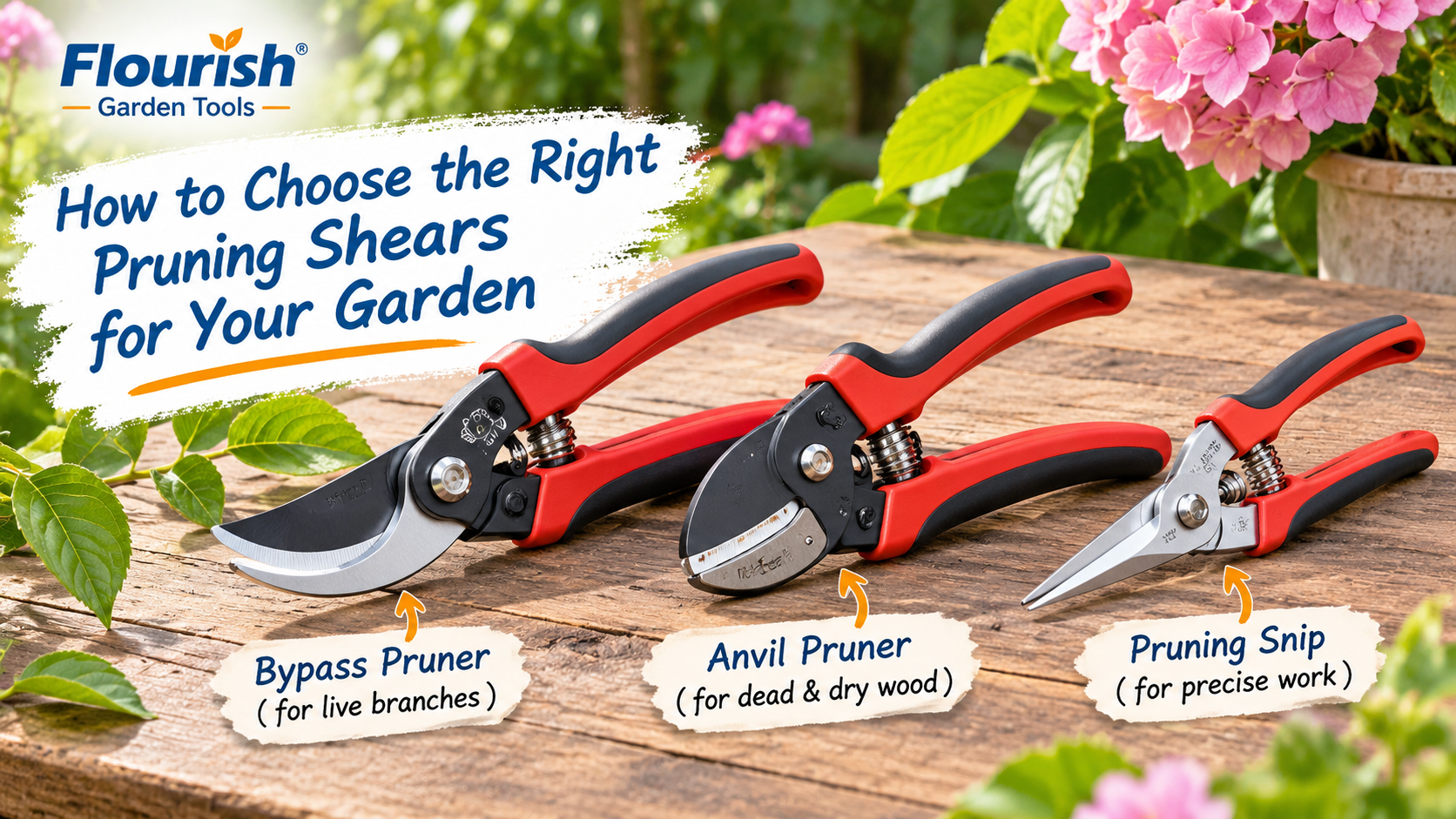
How to Choose the Right Pruning Shears for Your Garden
Choosing the right pruning shears can make everyday gardening easier, more comfortable and more effective. Whether you’re trimming roses, maintaining shrubs or removing dead branches, the right pair of garden pruners helps you make controlled cuts with less effort.
But with so many options available, how do you know which pruning shears are right for you?
The most important factors are the cutting mechanism, blade material, cutting capacity, handle comfort and overall construction.
In this guide, we’ll explain what to look for when choosing pruning shears and how different designs suit different gardening tasks.
1. Understand the Different Types of Pruning Shears
Not all pruning shears work in the same way. Choosing the right cutting mechanism is the first step.
Bypass Pruners – Best for Live Branches
Bypass pruning shears use two blades that pass closely alongside each other, similar to scissors.
This cutting action is particularly suitable for living stems and green branches because it can produce a clean, precise cut.
Best for:
-
Roses and flowering shrubs
-
Fresh green stems
-
Young branches
-
General garden maintenance
Key advantages:
-
Clean cutting action
-
Precise trimming
-
Suitable for delicate pruning work
For most everyday gardening tasks involving living plants, bypass pruners are a versatile choice.
Anvil Pruners – Suitable for Dead and Dry Wood
Anvil pruning shears feature a sharp cutting blade that closes against a flat supporting surface called an anvil.
Instead of two blades passing each other, the cutting blade presses the branch against the anvil.
Best for:
-
Dead branches
-
Dry stems
-
Harder, non-living plant material
Key advantages:
-
Supportive cutting mechanism
-
Practical for removing dead wood
-
Available in different blade and handle designs
Because anvil pruners can compress plant material during cutting, bypass pruners are generally preferred for living stems where a clean cut is important.
Pruning Snips – Best for Precision Work
Pruning snips are smaller cutting tools designed for detailed gardening tasks.
They are commonly used for:
-
Flower trimming
-
Deadheading
-
Cutting soft stems
-
Light harvesting
-
Precision gardening work
Pruning snips are not intended to replace heavy-duty pruning shears when cutting woody branches.
2. Bypass vs. Anvil Pruners: Which Should You Choose?
The choice depends mainly on the type of material you need to cut.
| Feature | Bypass Pruners | Anvil Pruners |
|---|---|---|
| Cutting mechanism | Two blades pass each other | Blade closes against an anvil |
| Best application | Live, green branches | Dead, dry branches |
| Cutting result | Clean, precise cuts | Can compress the stem |
| Typical use | Roses, shrubs, general pruning | Deadwood removal |
| Main consideration | Blade alignment | Blade and anvil contact |
Our recommendation: If you are buying your first pair of pruning shears for general garden maintenance, bypass pruners are usually the better starting point.
If you regularly remove dead or dry branches, anvil pruners can be a useful addition to your tool collection.
3. Choose the Right Blade Material
Blade material affects cutting performance, durability, sharpening and maintenance requirements.
Common blade materials used in pruning tools include carbon steel and stainless steel.
Carbon Steel Blades
Carbon steel is widely used in garden cutting tools because it can provide good hardness and cutting performance when properly manufactured and heat-treated.
Common grades include:
SK5 Steel
SK5 is a high-carbon tool steel commonly used in cutting blades. With suitable heat treatment and blade geometry, it can provide a hard, sharp cutting edge.
65Mn Steel
65Mn is a manganese-containing carbon steel used in various cutting and spring applications. Its performance depends on heat treatment, blade design and manufacturing quality.
50C / S50C Steel
50C and S50C are medium-carbon steel designations commonly encountered in garden tool specifications. They may be used in supporting blades or other components depending on the product design.
However, steel grade alone does not determine the quality of pruning shears.
Blade thickness, heat treatment, edge geometry, hardness and assembly quality all influence actual cutting performance.
Stainless Steel Blades
Stainless steel offers corrosion resistance advantages, making it attractive for tools frequently exposed to moisture.
However, the performance of a stainless steel blade depends on the specific grade, hardness and blade design.
A well-made carbon steel blade may outperform a poorly manufactured stainless steel blade, and vice versa.
What About Blade Coatings?
Some pruning shears feature protective surface finishes, such as:
-
PTFE / Teflon-type coatings: Can help reduce friction and material adhesion when properly applied.
-
Chrome plating: Provides a protective metallic surface finish on selected components.
A coating can improve certain surface properties, but it cannot compensate for poor blade geometry, inadequate heat treatment or weak construction.
4. Check the Cutting Capacity
Cutting capacity refers to the maximum branch diameter a pruning tool is designed to cut under specified conditions.
Common hand pruner specifications include cutting capacities such as 15 mm, 20 mm and 25 mm.
For example:
| Cutting Capacity | Typical Application |
|---|---|
| Up to 15 mm | Light pruning and smaller stems |
| Up to 20 mm | General garden pruning |
| Up to 25 mm | Larger branches within the tool’s rated capacity |
These are general selection guidelines, not guarantees that every branch of the stated diameter can be cut comfortably.
Actual cutting effort depends on the wood species, branch condition, blade sharpness and tool construction.
Important: Never force pruning shears through branches beyond their rated capacity. For larger branches, use appropriately rated loppers or a pruning saw.
5. Look for Comfortable, Ergonomic Handles
Handle comfort becomes particularly important when pruning for extended periods.
Consider the following features:
Ergonomic Grip Design
A well-shaped handle can improve control and help reduce discomfort during repeated cutting.
Non-Slip Materials
PP handles combined with TPR grip areas can provide a more secure and comfortable holding surface.
Finger Support
Some pruning shears include a finger hook or contoured grip to improve hand positioning and control.
Suitable Handle Size
Pruners should fit the user’s hand comfortably. A tool that is too large may be difficult to control, while one that is too small may require unnecessary effort.
If possible, hold the tool and test the opening and closing movement before purchasing.
6. Pay Attention to the Locking Mechanism and Spring
A pruning shear is more than just two blades and a pair of handles.
Its locking mechanism, spring and pivot assembly also affect everyday usability.
Safety Lock
A practical locking mechanism should keep the blades securely closed during storage and transportation.
Check whether the lock is easy to operate without opening accidentally.
Return Spring
The spring helps reopen the handles after each cut.
A smooth and consistent spring action is important for comfortable repeated use.
Pivot and Blade Alignment
The pivot should allow smooth blade movement without excessive looseness.
Poor blade alignment can lead to rough cutting, increased effort and premature wear.
When comparing pruning shears, these small construction details can be just as important as the blade material.
7. How to Maintain Your Pruning Shears
Even well-made pruning shears require regular maintenance.
Follow these simple steps:
-
Clean the blades after use. Remove sap, soil and plant residue.
-
Dry the tool thoroughly. Avoid leaving moisture on metal surfaces.
-
Inspect the cutting edge. Sharpen when needed using an appropriate method.
-
Lubricate moving parts. Apply a suitable lubricant to the pivot according to the manufacturer’s instructions.
-
Check the locking mechanism. Make sure it operates correctly.
-
Store in a dry place. Keep the blades locked when not in use.
When pruning diseased plants, follow appropriate tool disinfection guidance to reduce the risk of transferring plant pathogens.
Proper maintenance helps preserve cutting performance and extend the useful life of your pruning tools.
8. What Should Garden Tool Buyers and Retailers Consider?
For garden centres, wholesalers, distributors and private-label brands, choosing pruning shears involves additional considerations beyond individual gardening needs.
A successful product range may include different types of pruners for different customers.
For example:
-
Entry-level bypass pruners for everyday gardening
-
Anvil pruners for deadwood removal
-
Precision snips for flowers and soft stems
-
Larger-capacity pruners for demanding garden maintenance
When evaluating a pruning shears supplier, consider:
Material Specifications
Request clear information about blade steel, hardness, coating, handle materials and cutting capacity.
Product Quality
Check cutting performance, blade alignment, spring action, handle comfort and locking reliability.
OEM & Private Label Options
Ask about customized handle colors, logos, packaging and product specifications.
Packaging Requirements
Consider hang cards, blister packaging and other retail-ready presentation options.
Samples and Quality Control
Always evaluate samples and confirm the approved specifications before placing bulk orders.
A carefully selected pruning tool collection can help retailers serve different gardening needs and price points.
9. Explore Pruning Tools from Flourish Garden Tools
At Hangzhou Flourish Co., Ltd., we supply a range of garden cutting tools for importers, wholesalers, distributors and retailers.
Our pruning tool collection includes bypass pruners, anvil pruners, pruning snips, loppers and other garden cutting products.
Depending on the model, available features include carbon steel blades, heat-treated cutting edges, protective blade coatings, ergonomic handles and different locking mechanisms.
We also support OEM and ODM projects, including customized colors, branding, product specifications and retail packaging.
Whether you’re developing a new garden tool collection or expanding an existing product range, we welcome the opportunity to discuss your requirements.
Frequently Asked Questions About Pruning Shears
What is the difference between bypass and anvil pruning shears?
Bypass pruners use blades that pass each other and are generally preferred for live branches. Anvil pruners use a cutting blade against a supporting surface and are commonly used for dead or dry wood.
What cutting capacity should I choose?
Choose a rated cutting capacity that comfortably covers the branch sizes you regularly prune. For thicker branches, use loppers or a pruning saw instead of forcing hand pruners.
Are carbon steel pruning shears better than stainless steel?
Not necessarily. Carbon steel can offer excellent cutting performance, while stainless steel provides corrosion resistance advantages. Blade design, heat treatment and manufacturing quality are also important.
What are pruning snips used for?
Pruning snips are designed for light, precise tasks such as trimming flowers, deadheading and cutting soft stems.
How often should pruning shears be cleaned?
Clean them after use, especially when blades are covered in sap or soil. Additional cleaning or disinfection may be necessary when working with diseased plants.
Can I order pruning shears with my own brand?
Many manufacturers offer private-label options such as custom logos, handle colors and retail packaging. Available customization depends on the product design and order requirements.
Final Thoughts
Choosing the right pruning shears starts with understanding what you need to cut.
For living branches and everyday pruning, bypass pruners are usually the most versatile option. For deadwood removal, anvil pruners may be more suitable. For delicate trimming, precision snips offer greater control.
Beyond the cutting mechanism, pay attention to blade material, cutting capacity, handle comfort, locking design and overall construction.
A well-chosen pair of pruning shears can make gardening more enjoyable and help you maintain healthier-looking plants.
Looking for pruning shears for your retail or wholesale product range?
Explore the cutting tools collection at Flourish Garden Tools or contact our team to discuss OEM, ODM and private-label solutions.
Hangzhou Flourish Co., Ltd.
Website: www.flourishgardentools.com
Email: juana@hzflourish.com
WhatsApp: +86 137 5715 7075