
A useful garden tool RFQ (request for quotation) gives suppliers enough detail to quote the same product, packaging and order scope. For importers, distributors and private-label brands, a clear brief makes quotations easier to compare and exposes missing assumptions before sampling begins.
Start with the model, quantity per model, required specification, packaging and delivery destination. Then ask the supplier to identify exclusions, optional costs and the approvals needed before production. This guide focuses on manual garden tools.
1. Define the product and intended range
List each tool separately rather than requesting a single price for “garden tools.” Include the model reference, photographs or a drawing, intended use and any dimensions that matter to your range. State whether you want an existing product with your branding or a new design requiring development.
For small hand tools, our garden trowel vs transplanter guide can help organize the assortment. For customization, review the OEM vs ODM specification guide before preparing the brief.
2. Separate confirmed requirements from open questions
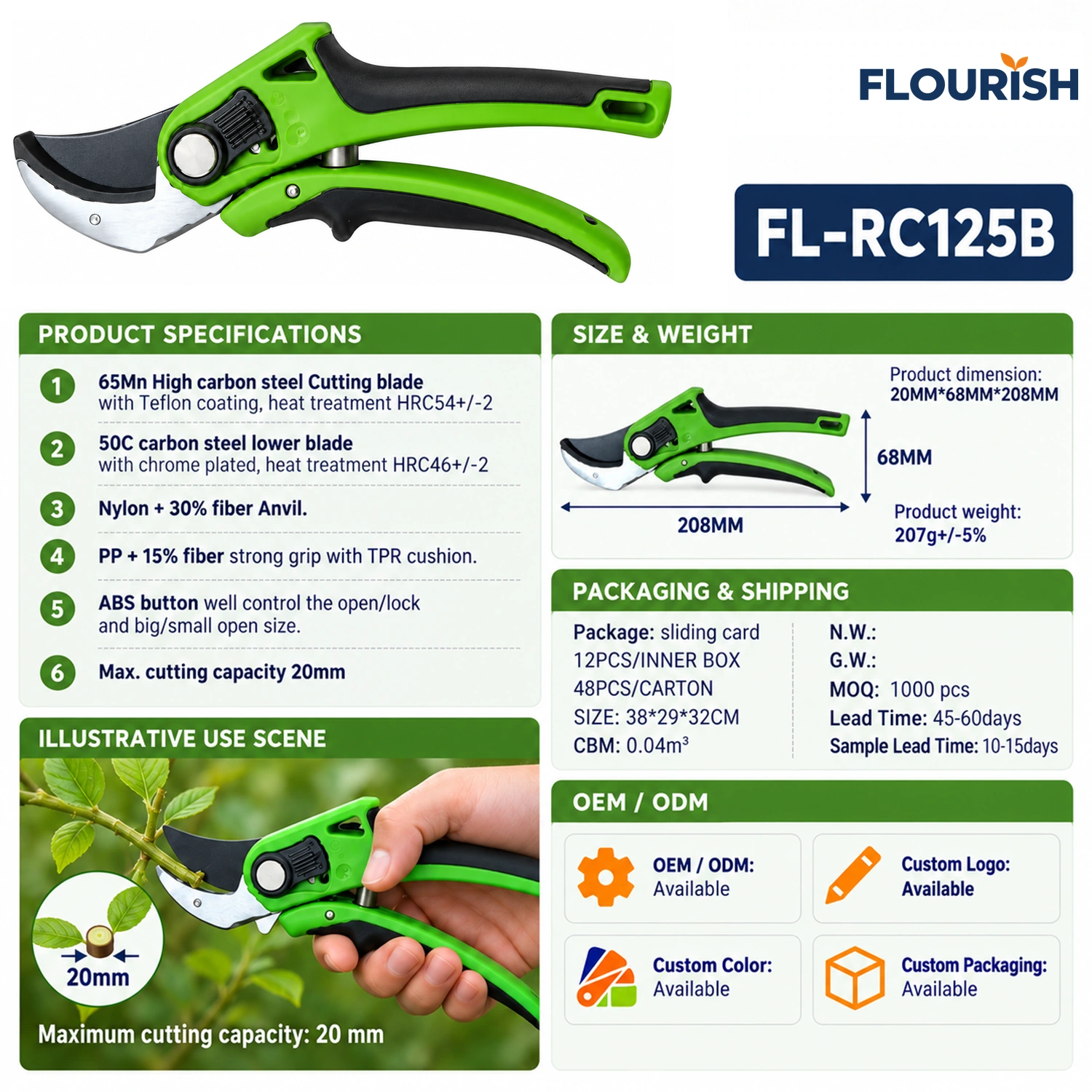
Use two columns in your inquiry: requirements that must be met, and details on which you want a supplier recommendation. Identify the head or blade material, handle construction, finish, dimensions and branding position where these have been decided. If a specification is still open, ask suppliers to describe the option they are quoting.
A photograph alone may not establish material grade, thickness or construction. Request those details in writing. Avoid comparing two quotations as equivalent when one includes an unspecified material or a different handle.
3. State quantities by model and variant
Give the order quantity for each model, color and packaging version. A total order of 3,000 tools divided among six models is different from an order of 3,000 identical tools. Ask whether minimum quantities apply to the model, custom color, logo process or printed packaging separately.
If you are evaluating several volumes, request clearly labeled price tiers using the same specification. Treat any future annual forecast as a forecast, separate from the initial purchase quantity.
4. Include packaging in the quotation scope
Describe the retail pack, inner carton and master carton requirements. Specify any hanging card, blade guard, divider, label or barcode artwork you need. Ask whether the quote includes artwork setup, printing and packing labor.
Use our garden tool packaging checklist to prepare these details. Request packed dimensions and gross weight when available, and distinguish estimates from measurements of an approved packed sample.
5. Ask for a sample and approval plan
Clarify whether the sample is an existing stock sample, a branded sample or a pre-production sample made to the agreed specification. Ask about the sample charge, courier charge, estimated preparation time and which details the sample will represent.
Agree on what must be approved before bulk production. Our garden tool sample inspection checklist provides a framework for reviewing the product. Record the approved sample reference and any remaining changes so the production team receives one clear specification.
6. Make timing and price assumptions visible
Ask what starts the production lead time: order confirmation, payment, artwork approval or sample approval. Separate production time from transit time. If you have a required arrival date, provide it as a planning requirement and ask the supplier to confirm feasibility.
Request the quote currency, validity period, delivery basis and named location. Have the supplier list freight, tooling, printing setup, testing or other charges separately where applicable. Do not assume a unit price includes every service needed to receive the shipment.
A practical RFQ template
- Product: model reference, images or drawing, and intended use.
- Specification: materials, dimensions, finish, handle and required performance details.
- Quantity: units per model, color and packaging version.
- Branding: logo file, position, size and preferred application method.
- Packaging: retail pack, protection, carton quantities and artwork requirements.
- Samples: sample type, quantity and approval scope.
- Destination and timing: destination market, delivery location and target arrival date.
- Quotation request: unit price, minimum quantities, one-time costs, exclusions, validity and lead-time assumptions.
How to compare the replies
Build a comparison sheet with one row for each requirement. Mark missing details as “not confirmed” rather than assuming they are included. Resolve differences in product construction and packaging before comparing the final price.
For example, a lower price for a bulk-packed tool cannot be compared directly with a price including a printed retail card and individual protection. Ask for a revised quotation against the same brief, then retain the agreed revision with the order documents.
Frequently asked questions
Can I request a quotation before every detail is decided?
Yes. Label it as a preliminary inquiry and ask the supplier to state the assumptions behind the estimate. Confirm the final specification before treating the quotation as the basis for an order.
Should I send a target price?
You can share a target price alongside the required specification and order quantity. Ask which details would need to change to meet it, and review those changes rather than accepting an unexplained substitution.
Is one minimum order quantity enough?
Not always. Ask separately about minimum quantities for the tool, custom color, branding and printed packaging, since these may be subject to different production arrangements.
Prepare your next garden tool inquiry
Send Flourish Garden Tools your model list, quantities and customization brief together with the packaging requirements. Identify any undecided items so the quotation discussion can focus on the options and approvals your project needs.