
Garden tool sample approval should establish a production reference, not simply record that a buyer liked a sample. For importers, distributors and private-label brands, the useful output is a traceable decision: which model was reviewed, which details were accepted, which changes remain open and who can authorize production.
This guide focuses on controlling that decision after inspection. It does not replace a purchase agreement or model-specific testing.
Separate inspection from approval
Inspection records observations. Approval decides whether a particular version meets the agreed purchasing requirements. A sample can look acceptable while its packaging artwork, handle colour or component specification remains unresolved. Avoid sending an unconditional approval when the decision actually depends on changes.
Use the garden tool sample inspection checklist to record observations first. Then issue a separate approval record that identifies the evidence and any exceptions. A photograph alone may not establish material composition, a concealed joint or performance under an agreed test.
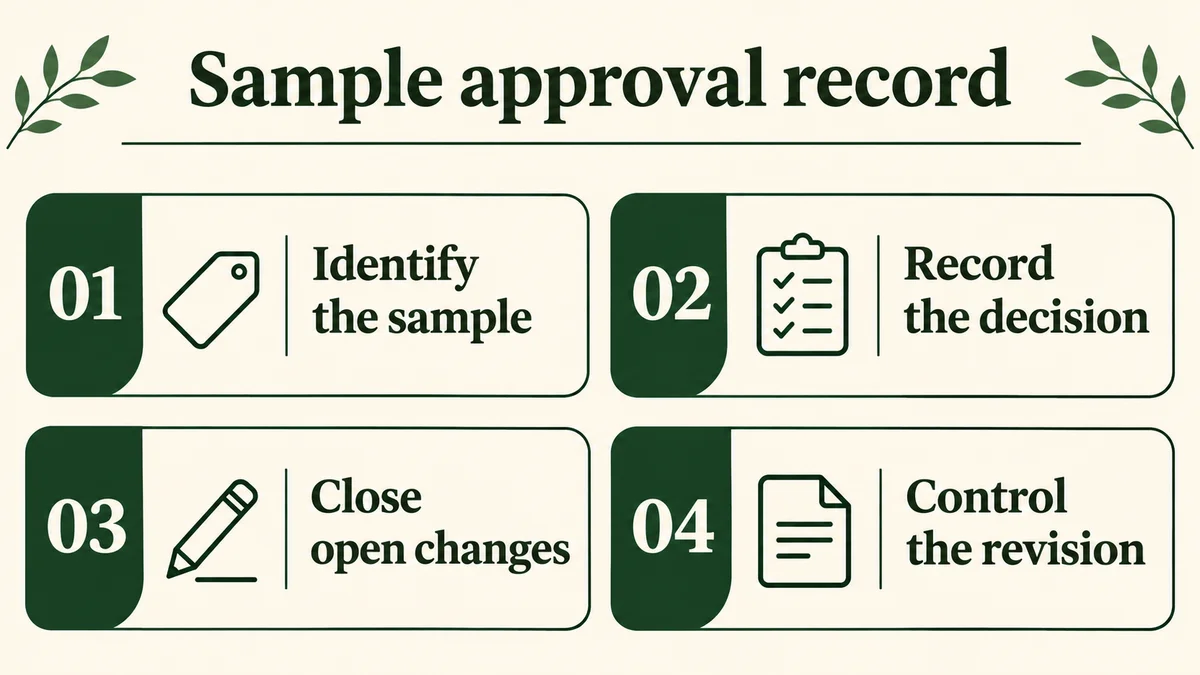
Identify the exact sample and specification revision
Give each reviewed sample a reference that connects it to the supplier model, quotation and specification revision. Record the date received and whether it represents a standard catalogue item, a modified sample or proposed production construction. Keep the supplier and buyer references together if they differ.
The record should identify the drawings, artwork and packing documents used during review. A reference such as “latest drawing” becomes ambiguous when files change. Use an explicit filename or revision and date. For sets, identify every included tool rather than approving the whole set from one component.
Write decisions that production can follow
Distinguish approved, conditionally approved and not approved. For conditional approval, list each required change, its responsible party, the evidence needed to close it and whether a revised physical sample is required. State clearly whether production may start. Do not allow a general message such as “looks good” to serve as an undefined production release.
For example, a buyer might accept the tool shape but require correction of the printed model reference before artwork release. That decision should identify the accepted physical sample and the outstanding artwork version separately. It should not imply that unreviewed packaging has been approved.
Retain a reference on both sides
Where practical, arrange for the buyer and supplier to retain identified reference samples. Confirm whether the retained versions are equivalent and record any known differences. Protect labels and store the samples so normal deterioration does not create confusion during later comparisons.
Photographs support identification, especially when they show the model reference, overall appearance and relevant reviewed details. They do not replace measurements or agreed functional checks. Keep the inspection record and approval decision with the sample reference so a later reviewer can reconstruct the basis of approval.
Control changes after approval
Ask the supplier to flag proposed changes to agreed materials, components, construction, finish, branding or packaging before implementation. Define who reviews each change and what evidence is required. A revised quotation does not by itself prove that the physical product and artwork have been re-approved.
For private-label development, the OEM and ODM specification guide helps separate artwork changes from product-development responsibilities. Keep approval history rather than silently replacing the previous file. State which revision supersedes it.
Use the reference during production inspection
An approved sample is one part of the inspection basis. The current specification, agreed inspection plan and order requirements also matter. Compare production samples against these records; do not assume that one retained sample defines every acceptable variation.
Agree how discrepancies are documented and escalated. Record the observed difference, relevant requirement and disposition. Claims about hardness, cutting capacity, corrosion resistance or certification require their own reliable evidence and should never be inferred from appearance.
Prepare the next enquiry with approval in mind
When discussing items from the garden hand tools range, ask how sample identification, specification revisions and change approval will be handled. Confirm the approval process before the order reaches a tight delivery deadline.
A useful sample approval record contains the model and sample reference, controlled document list, inspection evidence, decision, open actions, production-release status and named decision owner. Clear records make the approved version easier to reproduce and later differences easier to resolve.